
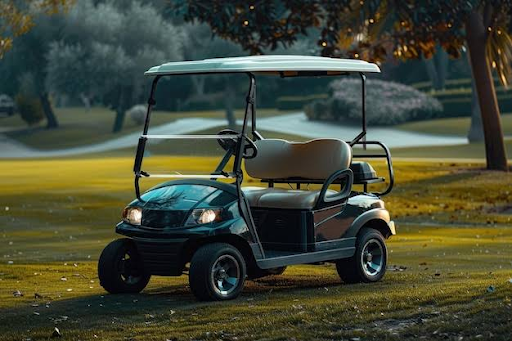
The golf cart has become one of the most versatile utility vehicles in everyday use — on courses, in retirement communities, across resort properties, and on working farms and campuses. As usage patterns have intensified, so has the demand for a power source that matches that intensity. The lead-acid battery that has powered golf carts for generations is being steadily replaced by lithium technology, and the owners and operators who have made the switch describe it as one of the most impactful upgrades they have made to their equipment.
Why the Switch to Lithium Is Happening Now
Lead-acid golf cart batteries have served adequately for decades, but their limitations have always been present — they were simply accepted as the cost of the technology. Weight, limited usable capacity, performance degradation as charge depletes, and the maintenance demands of flooded cell batteries are not new problems. What is new is a mature, accessible lithium alternative that resolves all of them without introducing significant new complications.
Quality lithium iron phosphate (LiFePO4) batteries are now widely available at price points that, while higher than lead-acid upfront, represent clear economic value when evaluated over the battery’s service life. The market has also developed the supporting infrastructure — compatible chargers, mounting solutions, and installation guidance — that makes the upgrade practical for individual owners and fleet operators alike.
What to Look for in a Golf Cart Lithium Battery
Choosing the right golf cart lithium battery requires evaluating several specifications against the specific demands of the application.
Voltage Compatibility — Most golf carts run on 36-volt or 48-volt systems. The lithium replacement pack must match the cart’s system voltage precisely. Many manufacturers offer single-pack solutions that replace the entire lead-acid bank, which simplifies installation and reduces the number of inter-battery connections that can introduce resistance or become points of failure.
Usable Capacity — Because lithium batteries deliver a much higher percentage of their rated capacity compared to lead-acid, like-for-like Ah comparisons are misleading. A 100Ah lithium battery at 80 to 95 percent usable capacity delivers significantly more real-world range than a 100Ah lead-acid battery at 50 percent usable capacity. Focus on usable energy (typically expressed in watt-hours or kWh) rather than rated Ah when comparing options.
Battery Management System Quality — The BMS is the intelligence layer that protects the battery from overcharge, over-discharge, excessive temperature, and cell imbalance. A well-designed BMS extends battery life, prevents damage from operating errors, and provides the state-of-charge information that drivers need to manage range confidently. This is not an area to compromise on in the interest of reducing purchase price.
Physical Dimensions and Mounting — Lithium packs have different physical profiles than the lead-acid batteries they replace. Confirming that the chosen pack fits the cart’s battery compartment — or that appropriate mounting adapters are available — before purchasing avoids installation complications.
The Performance Difference You Will Notice Immediately
The most immediately apparent change after switching to a lithium golf cart battery is consistent performance throughout the discharge cycle. Lead-acid carts lose noticeable power as the battery discharges — speed and torque drop progressively, which is why carts feel sluggish by the end of a long day. Lithium delivers flat voltage discharge, which means the cart performs the same at 20 percent charge as it does at 90 percent charge.
Rage improves meaningfully for two reasons: more of the rated capacity is actually usable, and the lighter weight of the lithium pack means the motor is doing less work to move the cart. Weight reductions of 150 to 200 pounds compared to a lead-acid bank are common, and that reduction translates directly into extended range on a given charge.
Charging and Maintenance After the Switch
Charging a lithium golf cart battery is simpler than charging lead-acid in practice — there are no watering requirements, no equalisation cycles, and no concern about sulphation from leaving the battery in a partially discharged state. However, one critical requirement is using a charger specifically programmed for lithium chemistry. Using a standard lead-acid charger on a lithium battery will not charge it correctly and may cause the BMS to disconnect the battery from the charger before a full charge is achieved.
Many cart owners upgrade their charger at the same time as the battery. Lithium-compatible chargers are widely available and typically charge a depleted lithium bank in two to four hours — a significant improvement over the eight or more hours required for a complete lead-acid charge cycle.
Conclusion
A golf cart lithium battery upgrade delivers consistent performance, extended range, dramatic weight reduction, and freedom from the maintenance demands of lead-acid technology. Choosing a quality LiFePO4 battery with a capable BMS and compatible charging infrastructure is the foundation of an upgrade that will serve reliably for a decade or more.