
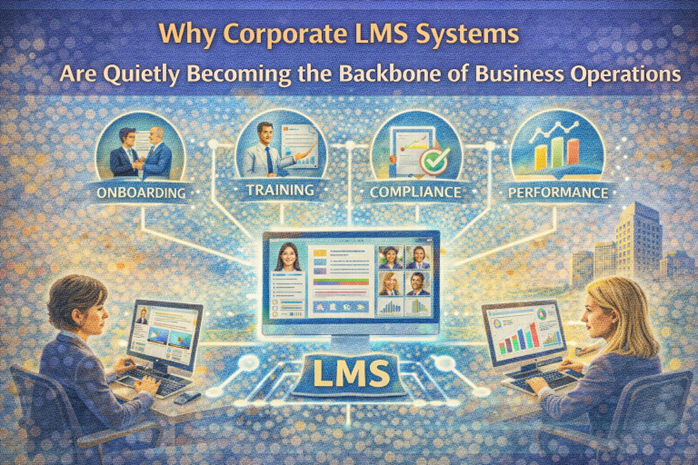
Organizations today are operating within a dynamic environment where learning is directly linked to daily work. Teams require access to knowledge at all times to remain efficient. Over time, learning tools have become more accessible for daily work. The emergence of corporate LMS systems is a result of a paradigm shift where learning is no longer separate but is closely linked to the functioning and growth of organizations.
1. Learning Moves Closer to Daily Work : Learning and work are no longer happening in separate spaces. Employees prefer to receive guidance on tasks rather than attending scheduled learning sessions. This is because they can apply what they learn immediately. A learning platform is essential as it ensures that learning is easily accessible. This makes it a part of daily work, ensuring confidence is built during execution.
2. Knowledge Becomes a Shared Asset: A business becomes stronger when knowledge transfer occurs freely between teams. This can be achieved through a centralized platform that enables all teams to access a common knowledge base without any delays. It prevents any form of confusion and leads to a unified process. Employees are able to grasp things more clearly and work more accurately. The application of common knowledge creates unity for all teams, ensuring they move forward in a clear manner.
3. Supports Growth: Skills need to be constantly updated to align with business needs, which are always changing. Today, learning aids have been created to help teams continuously update skills rather than training. Employees can learn new concepts in small steps without affecting their operations. This ensures that teams are always ready for new challenges. This also creates a culture where growth is a daily occurrence.
4. Real-Time Updates Improve Relevance: Information is constantly changing, and training becomes outdated. This holds back an organization’s progress. Learning platforms help update training instantly so that workers are always working with the latest information. All are up-to-date and ready to act appropriately in any situation. Real-time learning makes sure that knowledge is relevant to business needs. It also helps in better decision-making at every level.
5. Flexible Learning for Modern Work Models: There are diverse workplaces, including remote and hybrid work. Employees have to access learning from anywhere and on any device. Digital platforms allow for such flexibility without boundaries. Individuals learn at their own pace and still align with the objectives of the team. This is important for a balance and makes sure that learning is done seamlessly anywhere.
6. Consistency Across Business Functions: There is a need for consistency within organizations in order for quality to be achieved in all processes. Digital learning platforms make it possible for consistency in training each and every employee, making sure that they are on the same page. There is no confusion when guidelines have been well communicated, as everyone is aware due to learning from one source.
7. Engagement Through Clear Progress Paths: This motivates employees as they see progress in their development. Learning systems help in development through step-by-step guidance. One can measure progress and be encouraged to continue learning. This helps in providing direction and purpose in life. Employees who are engaged help in achieving business and team objectives.
8. Seamless Integration with Work Tools: Learning systems have become integrated into tools used by employees in their daily activities. This integration eliminates the need for switching from one application to another. Corporate LMS software is integrated into work tools and helps in learning without interruptions. Employees learn as they carry out their activities, making it efficient for them.
In conclusion, learning has now become an integral part of the functioning of any organization. A learning system helps teams stay aligned, trained, and ready for any kind of changes. This process emphasizes the significance of corporate learning management software as an essential infrastructure for business success. Digital technologies bring clarity as well as flexibility to the workplace.