
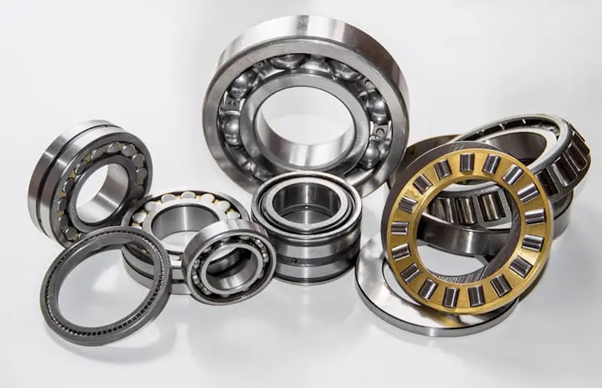
Indian industrial operations are high-stakes environments, and a tiny component, often no bigger than a dinner plate, can differentiate between smooth productivity and a disastrous shutdown. While a lot of procurement teams see bearings just as commodities, getting to operational excellence entails deeply understanding the Engineering Design Principles Behind High-Performance Tapered Roller Bearings. In markets like India where the environment is characterized by extremely high temperatures, a lot of dust, and load cycles that change constantly, standard components often cannot meet the requirements.
Achieving a thorough understanding of these principles goes beyond just the technical aspect; it is a strategic move towards reducing the overall cost of ownership. This article unravels the major aspects of bearing engineering such as conical shape and high-end metallurgy to assist you in making well-informed buying choices.
Conical Geometry: The Basis of Combined Load Management
The major point of difference for a tapered roller bearing is its capability of handling both radial and axial loads at the same time. Ball bearings, by contrast, depend on point contact while tapered rollers spread the load through line contact which means less stress is concentrated on a smaller area.
The Apex Principle
The Engineering Design Principles Behind High-Performance Tapered Roller Bearings are based on the concept of “apex.” Essentially, the surfaces in contact with the rollers (inner race, outer race, and rollers) are all segments of cones that share a common point on the main axis of the bearing.
- Rolling without Slip: This convergence ensures that there will be no sliding or “skidding” between the rollers and the raceways, which results in a reduction of internal friction.
- Load Distribution: By manipulating the contact angle of these cones, manufacturers are able to tailor a bearing to a particular use—a steeper angle indicates a bearing designed to withstand heavy load in a thrust direction, e.g. vehicle differentials, or gearboxes.
Advanced Metallurgy and Material Purity
In the Indian B2B market, “value-tier” bearings typically have conductor impurity or material inconsistencies issues that cause premature fatigue. On the other hand, high-performance models set the metallurgical standards as their highest priority.
Case-Hardening vs. Through-Hardening
- Resistance to Impact: Case-carburized (case-hardened) steel is often employed in manufacturing high-performance bearings. The treatment causes the outer layer of the steel to become extremely resistant to wear and hard while the core remains tough and ductile.
- Shock Load Absorption: In industries like mining and civil constructions involving heavy equipment, the “soft” core of the bearing made in this way acts as a shock absorber, which prevents the bearing from cracking. This is a failure mode that is typically seen in through-hardened steel under very high-stress conditions.
Inclusion-Free Steel
The durability of any bearing directly correlates with the steel being free from non-metallic inclusions. Small impurities at microscopic level actually serve as stress concentration points that result in sub-surface cracks and spalling (surface flaking). When sourcing, focus on manufacturers who use vacuum-degassed or ultra-clean steel so as to secure the mechanical endurance of the bearing under load.
Surface Topography and “Super-Finishing”
In addition to the macro-geometry, the Engineering Design Principles Behind High-Performance Tapered Roller Bearings emphasize the microscopic surface quality. The aim is not a mirror finish but controlled surface roughness.
- Boundary Lubrication: The “super-finishing” process eliminates the “peaks” of the metal surface and at the same time helps in leaving microscopic “valleys,” which act as lubricant reservoirs.
- Reduction of Friction: Metal-to-metal contact is minimized at the microscopic level, and these bearings run cooler by a significant margin. In India’s hot and humid climate, it is vital that the generation of heat inside the bearing is kept to a minimum in order to avoid the breaking down of the lubricant and thus lengthen the intervals between servicing.
The Critical Role of Preload and Internal Clearance
Proper installation is as important as the component’s engineering itself. One feature that makes tapered roller bearings stand out is that, in general, they need to be “preloaded” specifically in order to be able to function properly.
- Stiffness and Accuracy: Preload essentially means that, by assembly, a predetermined load is applied internally to remove the clearance. This leads to an increase in the stiffness of the shaft assembly and hence the better accuracy of the machine
- Problems with Improper Preload: Preloading the bearing to an excessive level will lead to overheating and rapid failure. Insufficient preload may cause rollers to vibrate or slide. This may result in the raceways being smeared. To guarantee accurate adjustment during installation, high-performance brands often equip their installers with special gauges or systems that are automatic.
Strategic Sourcing in the Indian Market: Price vs. Value
India has a large unorganized sector that very often competes on price by compromising the quantity of the material or the level of precision. When thoroughly exploring the Engineering Design Principles Behind High-Performance Tapered Roller Bearings, it is imperative to take very stringent measures in vetting the products.
The Hidden Costs of “Cheap” Bearings
Just like electrical cables, a cheap price at the beginning hides a multitude of risks:
- Dimensional Deviations: Budget bearings may have “undersized” rollers or thin raceways that do not meet the rated load capacities.
- Energy Inefficiency: Surface imperfections and the use of poor-quality steel cause the rotation to experience resistance, thus energy consumption is unnecessarily higher, which translates into higher electricity bills over the lifetime of the machine.
- Safety Issues: Failures of critical components such as bearings in the transportation or heavy lifts sector can result in fatal accidents.
Verification Checklist for Indian Sourcing
- A product must carry the BIS/ISI mark if it meets Indian Standards. Only then is certification complete. Meeting these rules isn’t optional. The correct standard matters just as much as having the label. Without approval, sale within India cannot happen. Each item needs this before reaching customers.
- Start by asking for test results from labs that hold NABL accreditation – this applies to checks on conductor resistance in electrical parts. Resistance data matters just as much as hardness when it comes to bearings. Material makeup gets tested too, not only strength. Accredited reports help confirm what a component is really made of. Proof from trusted labs gives clarity without guesswork.
- Starting with a number helps – each batch from top makers like Polycab, Havells, or KEI carries unique markers. Bearings made by global names follow similar tracking steps. Because of this system, fakes rarely slip through. Knowing where materials come from builds trust without needing promises. Batch IDs make it possible to check every step, quietly ensuring authenticity.
Environmental Resilience: Sealing and Lubrication
Even the most advanced Engineering Design Principles Behind High-Performance Tapered Roller Bearings cannot negate the effects of contaminants entering the system. In dusty industrial sectors in India like cement, textiles, and power generation, the sealing system constitutes a key line of defense.
- Flex stays put, even when it gets really hot or cold. These smart lip rings hold lube in place while keeping grit out. Tougher stuff works better under pressure shifts. Sealing strength holds firm through wild weather swings.
- Labyrinth seals step in when speed climbs too high for regular contact types. Instead of touching parts, they twist airflow into a tangled route dust can’t follow. These mazes block particles without creating drag on moving pieces. Long life comes from avoiding wear at every turn. Dust stays out while rollers keep spinning freely inside.
Predicted Future Trends
Technology infuses into bearing performance is the latest frontier. We are witnessing a transition from reactive maintenance to “predictive” models.
- Integrated Sensors: High-end bearings now feature sensors that monitor vibration, temperature, and load in real-time.
- Digital Twins: With the help of live data, engineers can build a digital twin of the bearing so that they can accurately predict its remaining useful life and thus do maintenance planning instead of waiting for the failure.
Conclusion: Investing in Reliability
Choosing a tapered roller bearing is a matter that affects your machinery for its entire lifetime. By opting for the Engineering Design Principles Behind High-Performance Tapered Roller Bearings, you are no longer treating the product as a “commodity” and instead, you are embracing reliability as a partner.
Keep strictly to standards that can be verified, call for openness in the source of materials, and give preference to producers that put their money in R&D and automated manufacturing. The safety and success of your industrial venture rest on the trustworthiness of the components that you select today.